August 17, 2026
Outdoor spaces can become far more useful and inviting when thoughtful lighting is incorporated into the overall landscape design. The right fixtures can highlight architectural features, illuminate pathways, improve visibility, and create a welcoming atmosphere after sunset. Landscape lighting can also help homeowners enjoy patios, gardens, pools, and entertaining areas well into the evening. Instead of relying on a few bright fixtures, a carefully planned system can distribute illumination where it is actually needed. Professional landscape lighting installation can help ensure fixtures are positioned effectively and connected safely. A well-designed system can also complement existing landscaping without overwhelming plants, structures, or outdoor living areas. According to LawnStarter, professionally installed landscape lighting may increase a home's value by approximately 15% to 20%. With strategic upgrades, homeowners can improve both the appearance and functionality of their outdoor environments.
Highlight Architectural Features
Architectural lighting can draw attention to the design elements that give a home its distinctive appearance. Fixtures can be positioned to illuminate columns, stonework, textured walls, entryways, and other exterior details. Uplighting can create attractive shadows and emphasize vertical surfaces without requiring large or visually distracting fixtures. Downlighting can provide a softer effect while mimicking the natural appearance of moonlight from elevated locations. The goal is to enhance existing architectural characteristics rather than make the lighting itself the primary attraction. Professional landscape lighting installation can help determine appropriate fixture placement based on the home's structure and surrounding vegetation. Layering different lighting techniques can create depth and prevent the exterior from appearing flat after dark. With careful planning, architectural illumination can give the property a polished appearance throughout the evening.
Illuminate Pathways and Walkways
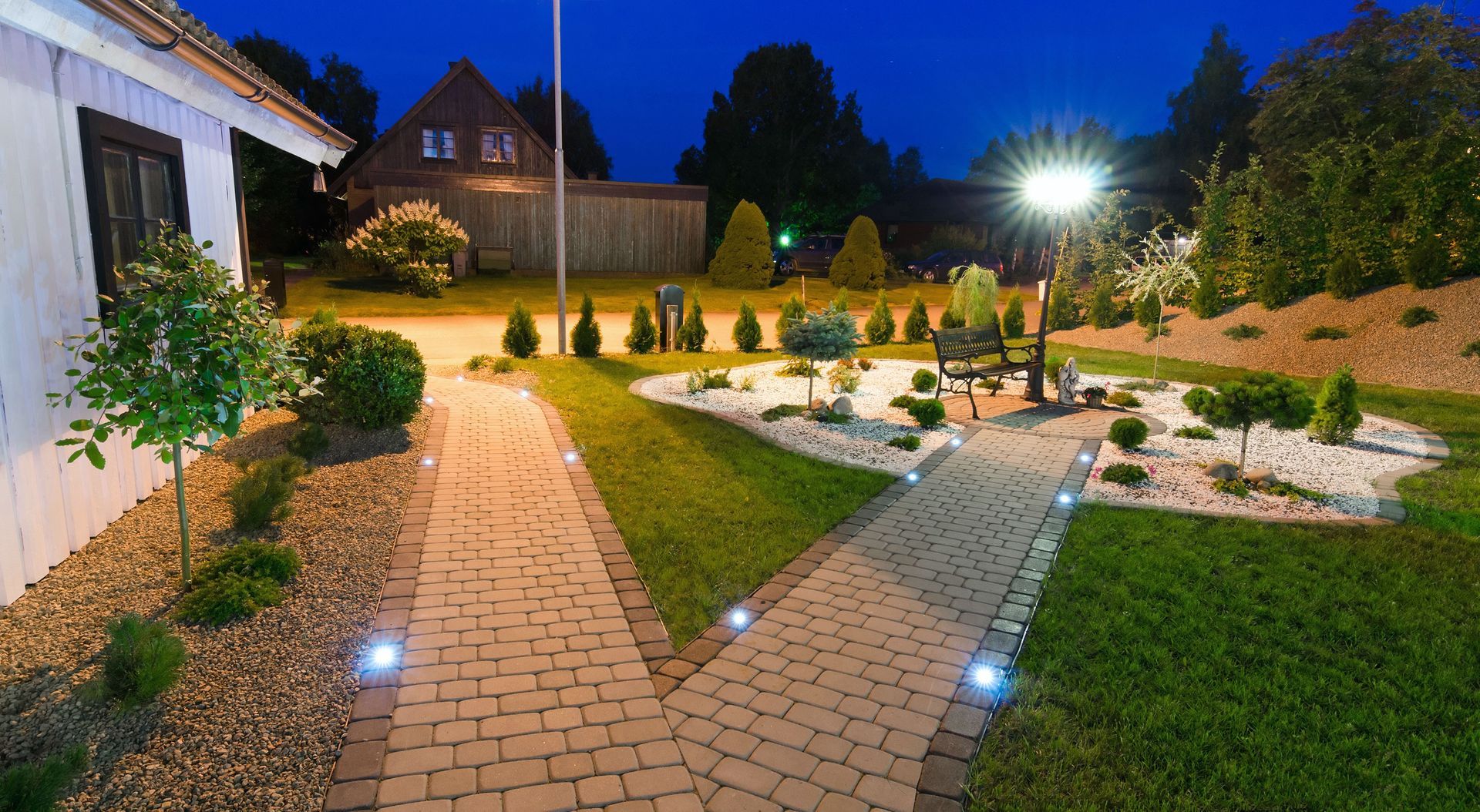
Pathway lighting can make outdoor areas easier to navigate after sunset while contributing to the overall design of the landscape. Fixtures placed along walkways can define routes between driveways, patios, gardens, entrances, and other frequently used areas. Evenly spaced lights can provide consistent visibility without producing excessive brightness. Low-profile fixtures are often useful because they illuminate the ground while remaining relatively subtle during the daytime. Placement should account for obstacles, changes in elevation, steps, and areas where people naturally walk. Professional landscape lighting installation can help create a balanced arrangement that avoids dark gaps and unnecessary glare. Properly positioned fixtures can also highlight landscaping alongside the path and make the route feel more inviting. Combining safety-oriented illumination with attractive design can make pathways more functional and visually appealing.
Upgrade Patio and Deck Lighting
Patios and decks often serve as extensions of the home's living space, making them valuable areas for thoughtful nighttime illumination. Lighting can be used to define seating areas, dining spaces, stairs, railings, and other features without overpowering the atmosphere. Recessed fixtures can provide subtle illumination beneath railings, steps, or built-in structures. String-style accents may add a decorative element, while strategically positioned spotlights can emphasize nearby trees or architectural features. The ideal combination depends on how the outdoor space is used and the mood homeowners want to create. Professional landscape lighting installation can integrate fixtures into the existing layout while maintaining a clean and organized appearance. Layered illumination can provide enough visibility for entertaining while preserving a comfortable atmosphere. A well-lit patio or deck can therefore remain useful long after daylight disappears.
Accentuate Trees and Garden Areas
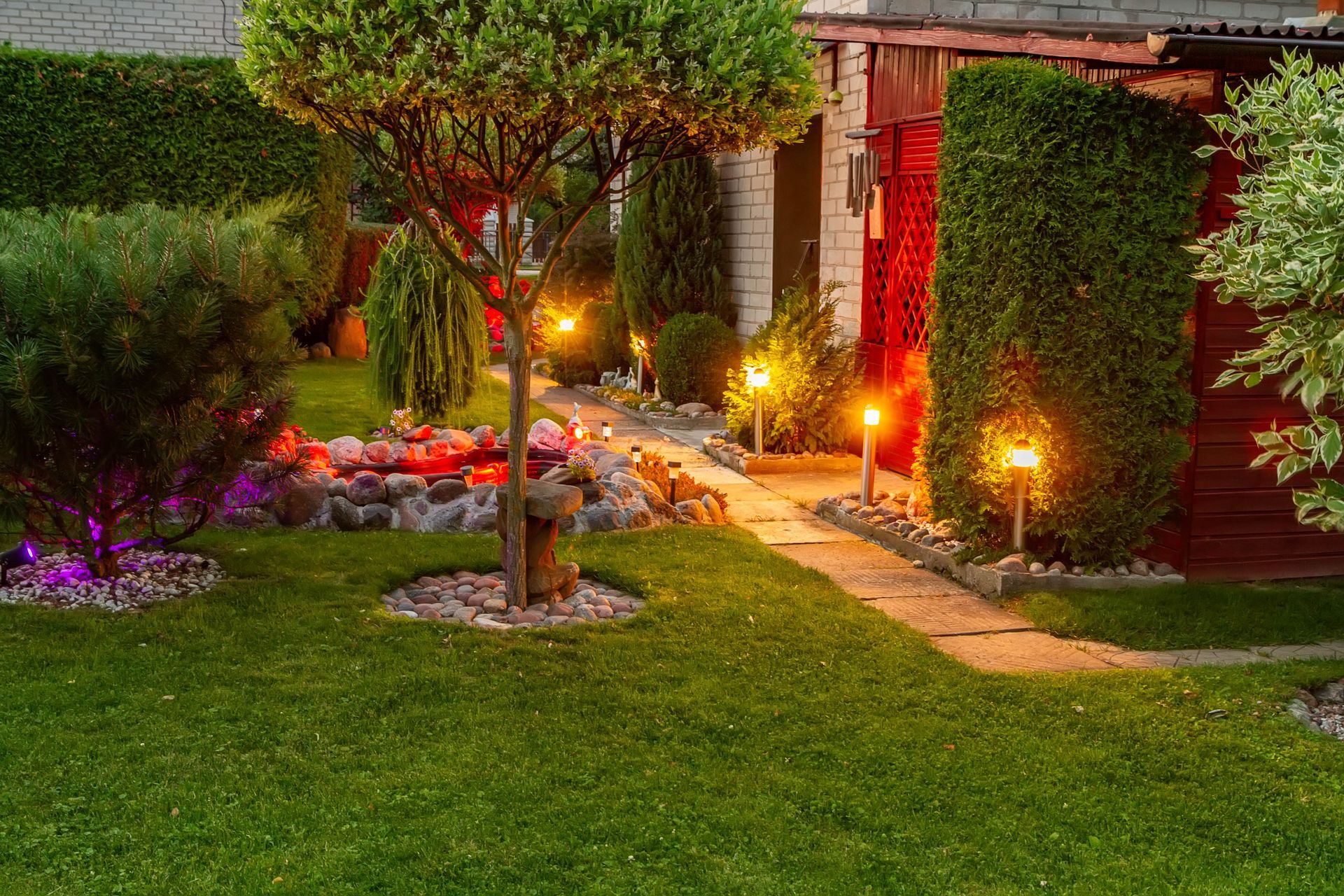
Trees, shrubs, flower beds, and garden features can take on an entirely different appearance when illuminated at night. Uplighting beneath a large tree can emphasize its trunk and branches while creating dramatic shadows across nearby surfaces. Smaller accent fixtures can highlight ornamental plants, sculptures, fountains, or other focal points. Lighting should be selected according to the size, shape, and location of each landscape feature. Too much illumination can wash out the natural textures of plants, while carefully directed fixtures can create depth and contrast. Professional landscape lighting installation can help identify focal points that deserve attention without making the entire yard equally bright. Seasonal plants can also be incorporated into the lighting plan to create changing visual interest throughout the year. Strategic garden lighting allows homeowners to appreciate their landscaping even when natural light is no longer available.
Add Water Feature Illumination
Water features can become striking focal points when appropriate lighting is added around or beneath them. Pools, fountains, ponds, waterfalls, and decorative streams can reflect light and create movement across the surrounding landscape. Subtle illumination can emphasize flowing water without making the area appear excessively bright. Fixtures can also be directed toward nearby rocks, plants, or architectural elements to create a more layered composition. Safety should remain a priority when electrical fixtures are installed near water. Professional installation helps ensure that appropriate equipment and placement methods are used for these conditions. Landscape lighting installation can be planned around the shape and movement of the water feature to achieve a cohesive effect. Properly illuminated water features can add visual interest and create a relaxing atmosphere for evening gatherings.
Improve Outdoor Security and Visibility
Outdoor lighting can contribute to better visibility around entrances, walkways, driveways, and other areas of the property. Well-positioned fixtures can make it easier to identify changes in terrain, steps, obstacles, and potential hazards after dark. Lighting around entrances can also make the property feel more welcoming when family members or guests arrive in the evening. Motion-activated fixtures may provide additional illumination when movement is detected in selected areas. However, excessive brightness can create glare and may actually make certain areas harder to see. A balanced system can provide useful illumination without turning the property into an overly bright environment. Professional landscape lighting installation can help homeowners position fixtures to support visibility while maintaining an attractive appearance. Combining decorative and functional lighting can make outdoor areas more comfortable while addressing practical nighttime needs.
Incorporate Energy-Efficient Fixtures
Energy efficiency is an important consideration when adding or upgrading outdoor lighting systems. LED fixtures are commonly used because they can provide strong illumination while generally consuming less energy than traditional lighting technologies. They are available in different sizes, shapes, brightness levels, and color temperatures to accommodate a variety of landscape applications. Efficient fixtures can also reduce the amount of electricity required to operate a system over time. Timers, smart controls, and automated schedules can provide additional control over when lights operate. Homeowners can use these controls to prevent unnecessary illumination during hours when the property is not being used. Professional landscape lighting installation can include an evaluation of fixture types, control options, and placement to create an efficient system. Combining efficient equipment with thoughtful scheduling can provide attractive lighting without unnecessary energy consumption.
Create a Layered Lighting Design
A successful outdoor lighting system usually benefits from multiple layers rather than relying on one type of fixture throughout the property. Ambient lighting can establish general visibility, while accent fixtures can draw attention to specific plants, structures, or architectural details. Pathway lights can define movement routes, and task-oriented fixtures can provide stronger illumination where outdoor activities take place. Combining these elements creates contrast and prevents the landscape from looking uniformly bright. Fixture positioning is also important because light should generally be directed toward the intended feature rather than into neighboring properties or people's eyes. Professional landscape lighting installation can bring different lighting techniques together into one coordinated design. A layered system can create depth, balance, and visual interest while allowing each area of the property to serve its intended purpose. Thoughtful lighting design can ultimately make the entire outdoor environment feel more cohesive after sunset.
Professional planning is important because fixture placement, brightness, wiring, controls, and landscape features all influence the final result. A system that is too bright or poorly positioned can create glare and diminish the visual impact of the property. Superior Landscape Lighting can help homeowners develop a lighting plan that complements their property's layout and outdoor goals. Professional landscape lighting installation can provide the precision needed to position fixtures strategically and create a balanced finished appearance. Whether you want to highlight mature trees, illuminate a patio, improve pathway visibility, or transform your entire yard, a customized approach can make a noticeable difference. Contact us today to discuss your outdoor lighting goals and create an inviting landscape that looks beautiful long after the sun goes down.